Full disclosure, this game is short. Like Call Of Duty: Modern Warfare 2 short. Like LOTR Extended Editions short.
At 4-5 hours its hella short. That aside, I liked it a lot more than Modern Warfare 2. Unlike the Bruckheimer-esque bombastic nonsense narrative of MW 2, MOH has a deliberate and specific pace. While it outright steals mechanics and set-pieces from MW 2, the singular vision of the game is to reveal at least some of the reality of modern combat. Weapons and tactics are reasonably realistic and the game has a couple of truly climatic set-pieces that grip the player in a brief unfettered bout of pure tension.
Switching between Tier 1 operators infiltrating Al Qaeda camps in and around the mountains of Afganistan, Army Rangers sent to secure areas "cleared" by the Tier 1's, and in select few sections, in vehicle missions, the most notable of which is as an Apache gunner, MOH never tries to be anything but a MW 2 clone. The creative direction given the team is clear, in the most Kotick way, that this is intended to exploit the COD audience by giving them more of what they already have.
While there are moments of sheer joy and glimmers of originality in the game, such as a sniping sequence that gives the .50 caliber sniper rifle its due, it never delves too deep. You are given a spotter and told about wind speed and distance, but the only real possible impediment to your aim is how long the player forces the character to hold his breath.
Medal of Honor is a franchise that desperately needed a reboot, and moving the setting and gameplay to an ongoing conflict was a brave choice, but the game suffers as that was the only brave choice. Hopefully MOH earns a chance at a sequel, and an opportunity to develop gameplay that matches the bravura of its setting.
Friday, October 29, 2010


A Trip Worth Taking: Enslaved (360)
Quiet moments are few and far between in most games. Silence is difficult, even in a film, as only the acting can carry the emotion and the story forward. Without that connection between the performers and thus with the audience, silence because awkward pauses and dead air.
Enslaved has many quiet moments, the most powerful of which happens late in the game, structurally where a film would slow just before the beginning of the third act. Told in whispers and closeups, it stands as an example of how games have matured as a medium. In that moment of pure quiet emotion, Enslaved fulfills the promise shown in the bombastic opening sequence.
Spectacular character animation reveals both main characters in the first minutes; Monkey, a brash sinewy brawler, struggles in his bonds, within a pod. Across the hall a similar pod opens with an explosion and a ragged but beautiful young woman,Trip, staggers out into freedom. As she escapes, Monkey's own prison is broken and it becomes apparent whatever Trip did is having widespread effect on what is revealed to be a flying vessel. The basic movement and combat mechanics are revealed through narrative as Monkey moves from set piece to set piece within a disintegrating vessel. Monkey's very movements reveal who and what he is, rather than use rote animation cycles.
Trip and Monkey finally meet face to face, only to have Trip, an electronics genius with no survival skills, enslaves Monkey with a headband that links their hearts. If she dies, he dies. This conceit drives the emotional core of the film as the two characters earn each other's trust, culminating a quiet moment of truth late in the game.
Though the story and characters are nearly unparalleled, the gameplay is repetitive and shallow. A slight RPG layer allows the player to upgrade Monkey's offensive and defensive abilities but the same moves are used over and over. Platforming is one of the gameplay pillars, and while it is rewarding and fun, Enslaved suffers from handholding and over-directing the player.Taking a cue from Uncharted in leading the player through art direction, color and character animations would have benefited this game tremendously.
Enslaved is a pinnacle of character animation and story, hindered by mediocre gameplay. It is a must play if only to see the future of narrative in gaming.
Monday, September 20, 2010
A Reach beyond their grasp
Having completed the Campaign of Halo Reach on both Heroic and Legendary (and thanks to MitchyD for the co-op invite), the only emotion I have left for this game is disappointment.
Taking place chronologically prior to Halo: Combat Evolved, H:R follows a six man team of Spartans, (Noble team) based on the planet Reach, home of the Spartan program. Investigating what sounds like a simple act of piracy leads them into a discovery of a full-on invasion of the planet by the Covenant. What is clear from playing this short 8-10 hour game is that Bungie has made some massive assumptions about the audience in crafting what can loosely be called a narrative. It is assumed the audience already know what Reach is, what it represents and why the invasion is occurring. It is assumed that the relationships between the Spartans and those others within the Spartan program itself are well known. It assumes the backbone of the story is ingrained into those playing the game, so the developers could paint with the lightest of strokes. Finally, it assumes we will care about these characters and their eventual sacrifices because we already know all of the above. Bungie is relying on the audience to do the heavy lifting, and given the game is a prequel destined to lead directly to the events of Halo:CE, these are all erroneous assumptions.
It is also clear Bungie lost interest in Halo some time ago and while they have made a superb multiplayer experience, the single player campaign is bolted onto repurposed MP maps and tied together with unclear and underwhelming cutscenes. Essentially abandoning the mythology they created Bungie told what could be the greatest story of the Halo universe in the worst possible way and in direct competition/contrast to their own novelization "The Fall of Reach".
Though the prettiest of the Halo games to date, Reach owes a great deal to Halo 3:ODST in its structure. The appearance of open environments are actually simply massive corridors populated with waves of enemies sporting weapons and tech that never again appear in the Halo universe. The most compelling and only original mission of the game is a launch into space aboard a Sabre fighter, where the battle becomes a thrilling zero-gee ballet against waves of enemy craft. It concludes with a Halo 2 "homage" fight in vacuum as the Covenant ship is breached and boarded, and returns to repetitive form.
A late game section has Noble flying from sky-scraper to sky-scraper as the strangely empty city around them burns. Unlike the far too short urban combat of Halo 2, Reach again follows the ODST model of battles set in an empty area, after the city has already fallen. While Halo 2 had constant chatter of wounded civilians and soldiers in its urban environments, Reach peppers random civilians and soldiers as window dressing, with corpses ending up being just part of the window dressing rather than reflecting the actual impact of a global invasion. Perhaps a victim of an aging engine unable to keep up with the ambition of the developers it ends up having little impact.
As a multiplayer experience, Bungie continues to have virtually no competition, with MP integration built deep into the experience starting right from the main menu. Designed to give the player the experience of progress without awarding game unbalancing perks a la the "Activision method", Reach has deep customization of the player character appearance and sound. Though the minefield of Xbox Live is wrought with obnoxious homophobes/racists, the ability to drop in and out of both campaign and multiplayer with friends is almost effortless (unless you are trying to tie two separate 360 on the same home network to an internet session apparently).
Halo: Reach is the end of Bungie's stewardship of the franchise and their exhaustion shows. Mining their own back-story while framing it in the template of the previous games allowed them to capitalize on their strength as a multiplayer developer while paying lip service to a single player experience. Reach is at best a mediocre SP game and a disappointing end to one of the defining franchises of modern gaming.
Taking place chronologically prior to Halo: Combat Evolved, H:R follows a six man team of Spartans, (Noble team) based on the planet Reach, home of the Spartan program. Investigating what sounds like a simple act of piracy leads them into a discovery of a full-on invasion of the planet by the Covenant. What is clear from playing this short 8-10 hour game is that Bungie has made some massive assumptions about the audience in crafting what can loosely be called a narrative. It is assumed the audience already know what Reach is, what it represents and why the invasion is occurring. It is assumed that the relationships between the Spartans and those others within the Spartan program itself are well known. It assumes the backbone of the story is ingrained into those playing the game, so the developers could paint with the lightest of strokes. Finally, it assumes we will care about these characters and their eventual sacrifices because we already know all of the above. Bungie is relying on the audience to do the heavy lifting, and given the game is a prequel destined to lead directly to the events of Halo:CE, these are all erroneous assumptions.
It is also clear Bungie lost interest in Halo some time ago and while they have made a superb multiplayer experience, the single player campaign is bolted onto repurposed MP maps and tied together with unclear and underwhelming cutscenes. Essentially abandoning the mythology they created Bungie told what could be the greatest story of the Halo universe in the worst possible way and in direct competition/contrast to their own novelization "The Fall of Reach".
Though the prettiest of the Halo games to date, Reach owes a great deal to Halo 3:ODST in its structure. The appearance of open environments are actually simply massive corridors populated with waves of enemies sporting weapons and tech that never again appear in the Halo universe. The most compelling and only original mission of the game is a launch into space aboard a Sabre fighter, where the battle becomes a thrilling zero-gee ballet against waves of enemy craft. It concludes with a Halo 2 "homage" fight in vacuum as the Covenant ship is breached and boarded, and returns to repetitive form.
A late game section has Noble flying from sky-scraper to sky-scraper as the strangely empty city around them burns. Unlike the far too short urban combat of Halo 2, Reach again follows the ODST model of battles set in an empty area, after the city has already fallen. While Halo 2 had constant chatter of wounded civilians and soldiers in its urban environments, Reach peppers random civilians and soldiers as window dressing, with corpses ending up being just part of the window dressing rather than reflecting the actual impact of a global invasion. Perhaps a victim of an aging engine unable to keep up with the ambition of the developers it ends up having little impact.
As a multiplayer experience, Bungie continues to have virtually no competition, with MP integration built deep into the experience starting right from the main menu. Designed to give the player the experience of progress without awarding game unbalancing perks a la the "Activision method", Reach has deep customization of the player character appearance and sound. Though the minefield of Xbox Live is wrought with obnoxious homophobes/racists, the ability to drop in and out of both campaign and multiplayer with friends is almost effortless (unless you are trying to tie two separate 360 on the same home network to an internet session apparently).
Halo: Reach is the end of Bungie's stewardship of the franchise and their exhaustion shows. Mining their own back-story while framing it in the template of the previous games allowed them to capitalize on their strength as a multiplayer developer while paying lip service to a single player experience. Reach is at best a mediocre SP game and a disappointing end to one of the defining franchises of modern gaming.
Thursday, September 9, 2010
State of my PC nation
Given that I often have the same games installed on my PC over multiple hardware changes I thought it would be cool to capture some screenshots of the games I am playing with it iteration of hardware.
It is also striking the level of detail even older games have when running at resolutions far beyond what is capable on current console generations. The vegetation in the Just Cause shot is a good example of this.
Running with the following specs I captured the below using FRAPS at 1680 x 1050 unless noted:
1.8 Ghz Intel E2160 Dual Core CPU
6 gigs DDR 2 RAM, running dual channel 400 FSB
Radeon HD 3850 graphics
Creative Audigy SB 5.1
Gigabyte P35 motherboard
Antialiasing and v-sync disabled with usually 4x Anisotropic enabled
Age Of Conan 1280 x 768 Graphics set to Low/Medium (click to enlarge)

Borderlands Graphics set to High(click to enlarge)

Dragon Age: Origins details set to High

Fallout 3 Details set to High

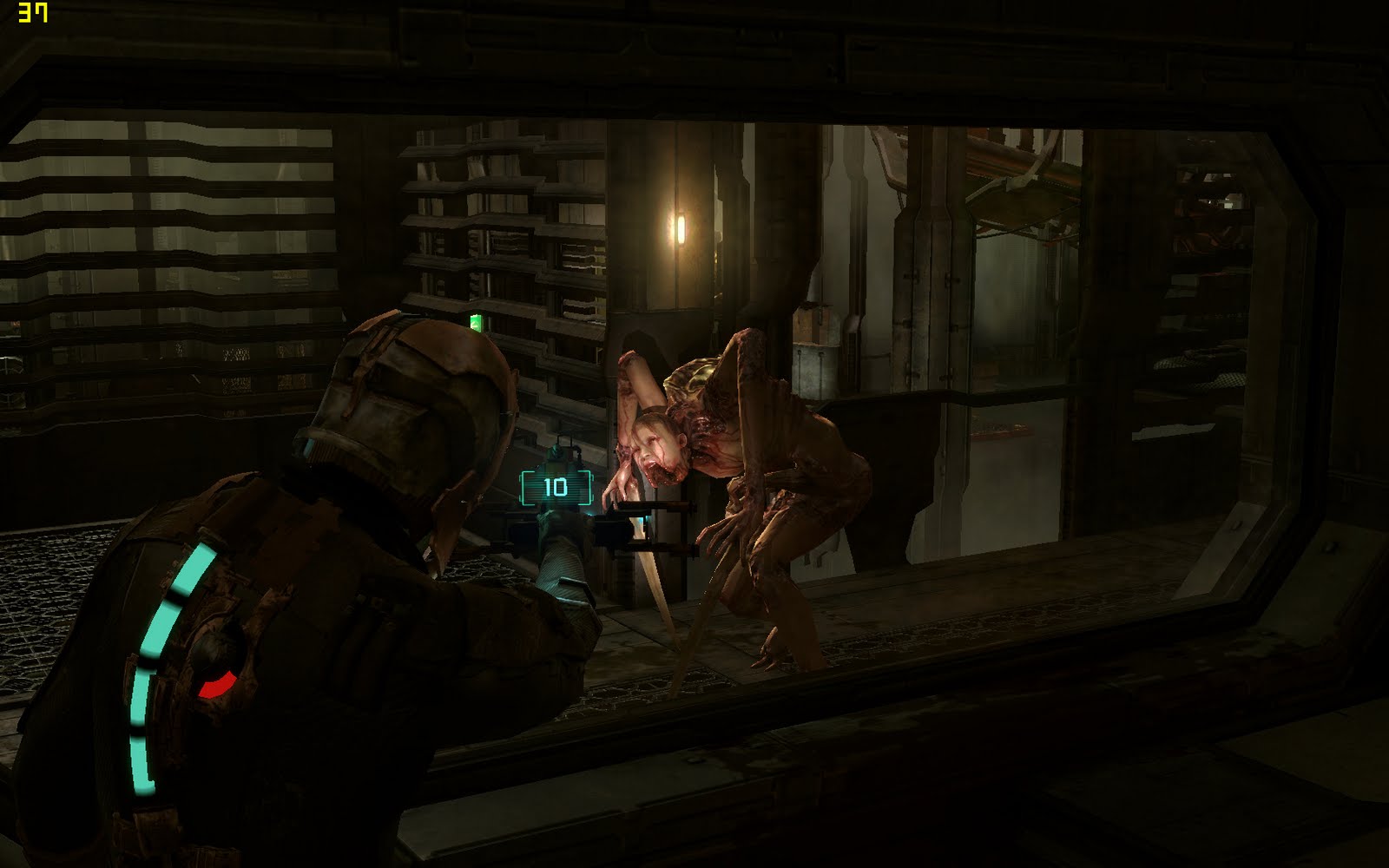
Dead Space Details set to High

Ghostbusters 1440 x 900 details set to medium (brutally buggy port)

JUST CAUSE Details set to High

Metro 2033 Comparison shots details set to high vs some details off


Titan Quest Details set to High

S.T.A.L.K.E.R details set to High

It is also striking the level of detail even older games have when running at resolutions far beyond what is capable on current console generations. The vegetation in the Just Cause shot is a good example of this.
Running with the following specs I captured the below using FRAPS at 1680 x 1050 unless noted:
1.8 Ghz Intel E2160 Dual Core CPU
6 gigs DDR 2 RAM, running dual channel 400 FSB
Radeon HD 3850 graphics
Creative Audigy SB 5.1
Gigabyte P35 motherboard
Antialiasing and v-sync disabled with usually 4x Anisotropic enabled
Age Of Conan 1280 x 768 Graphics set to Low/Medium (click to enlarge)

Borderlands Graphics set to High(click to enlarge)

Dragon Age: Origins details set to High

Fallout 3 Details set to High

Dead Space Details set to High
Ghostbusters 1440 x 900 details set to medium (brutally buggy port)

JUST CAUSE Details set to High

Metro 2033 Comparison shots details set to high vs some details off


Titan Quest Details set to High

S.T.A.L.K.E.R details set to High

Game-A-Day Post-A-year
Fall 2010 is about to drop like a 10-ton weight,lead by the juggernaut Halo: Reach. Unfortunatley the spirit is willing but the flesh is weak and I have grossly neglected the simple act of writing to this blog about the games I play on a daily basis. While this tardiness may well never change, neither will my recreational habits so here's hoping I can knock some stuff out.
Upcoming is a snapshot of my PC setup, with the hopes of making this blog part of a living record of the hardware changes that happen and its impact on games, as I often have games installed for years, unfinished.
For now, this is a quick breakdown of what I have been tearing up over since the spring.
Red Dead Redemption: From Rockstar, the makers of the Grand Theft Auto series, this open world Western set just in the early 1900's scratches every itch a Western fan can have. Beautiful and sprawling, RDR follows John Marsten, a bad man who has done bad things but is trying to find a new life with his wife and son on the frontier. Unapologetically violent, RDR manages authenticity without straining credibility and is a deep 40 hour story. The ending, while unpopular, is poetic and appropriate.
Alpha Protocol: A spy story wrapped in RPG dressing, AP is a brutal mess of unfinished code and relentless ambition.Simply one of the ugliest Unreal Engine games ever made and burdened with a sluggish control scheme, the game stands only on its voice-acting and story. Filled to brimming with half-baked concepts and poorly executed ideas, AP is a frustrating kind of fun, the "time before you do the crime" and saved only by its story.
Blur: Advertised as a "grown-up's Mario Kart" Blur liberally lifts power-ups and tactics from the Nintendo playbook to create a fast paced racing game where victory can be stolen at the last second with a properly applied power-up. Varied tracks and unlock-able vehicles in both single-player and multi-player extend play time, making for a exciting variation on racing games.
Upcoming is a snapshot of my PC setup, with the hopes of making this blog part of a living record of the hardware changes that happen and its impact on games, as I often have games installed for years, unfinished.
For now, this is a quick breakdown of what I have been tearing up over since the spring.
Red Dead Redemption: From Rockstar, the makers of the Grand Theft Auto series, this open world Western set just in the early 1900's scratches every itch a Western fan can have. Beautiful and sprawling, RDR follows John Marsten, a bad man who has done bad things but is trying to find a new life with his wife and son on the frontier. Unapologetically violent, RDR manages authenticity without straining credibility and is a deep 40 hour story. The ending, while unpopular, is poetic and appropriate.
Alpha Protocol: A spy story wrapped in RPG dressing, AP is a brutal mess of unfinished code and relentless ambition.Simply one of the ugliest Unreal Engine games ever made and burdened with a sluggish control scheme, the game stands only on its voice-acting and story. Filled to brimming with half-baked concepts and poorly executed ideas, AP is a frustrating kind of fun, the "time before you do the crime" and saved only by its story.
Blur: Advertised as a "grown-up's Mario Kart" Blur liberally lifts power-ups and tactics from the Nintendo playbook to create a fast paced racing game where victory can be stolen at the last second with a properly applied power-up. Varied tracks and unlock-able vehicles in both single-player and multi-player extend play time, making for a exciting variation on racing games.
Split/Second: Set as a high-concept reality TV show where contestants race against each, outside attacks and destructive changes in the track itself, Split/Second is thrilling in the short term but grows repetitive quickly. The destructible tracks are re-purposed but never really changed and the "rubber-band" effect of the AI never getting too far ahead nor letting the player dominate grows tiresome quickly.
Alan Wake: A long in the making followup to Remedy's Max Payne, Alan Wake follows a writer and his wife who attempt to vacation in a sleepy town in the Pacific Northwest. Once they arrive they are attacked by a dark force that appears to stem directly from the Wake's own words. Literary minded and often surreal, Alan Wake suffers from extraordinarily repetitive gameplay. The ambiguous story is ambitious but under-served, making for a game long on ideas and short on entertainment.
Prince Of Perisa Forgotten Sands: One of the slowest starting games mentioned, POP:FS opens exactly like every other POP game and takes its time getting started. The combat mechanics are extensively simplified following the example of last year's Prince Of Persia "reboot" rather than following the example of POP:The Two Thrones. Released to coincide but not replicate the POP film, Forgotten Sands has a compelling story and after quickly ramps up a few hours in to become a challenging platformer with light RPG elements.
Just Cause 2: A sequel to the Robert Rodriguez inspired original again find our hero with an inexhaustible supply of parachutes and grappling hooks. Hampered by atrocious voice-acting and writing the campaign story is pointless and best ignored in favor of exploring the massive game map, wreaking havoc. Just Cause 2 is a silly time killer that like any good popcorn, is forgotten as soon as you are finished with it.
Bayonetta: Sexy and insane, Bayonetta is a love letter to classic Sega games wrapped in Devil May Cry style combat mechanics. An incompressible story litters the gameplay, but double entendre's and one-liners make the experience entertaining outside of the spasmodic fighting. Lightening fast reflexes are a must to play the game to its fullest.
Aliens vs Predator: Essentially a remake of the original PC AVP by developer's Rebellion, AVP is a dark repetitive game suffering from loose controls. Brutal graphic violence is unable to compensate for cliche scenarios leaving me wishing I had simply replayed either of the original PC AVP games.
Left 4 Dead 2: Shipped only a year after the original L4D, Valve stunned the world by releasing a sequel within that timespan that was also good. L4D2 is tight, multi-player team based shooter set in a zombie apocalypse.Fast-paced, violent and scary, L4D2 follows the template set by Portal and L4D by allowing the story to be told by the environment, rather than clunky exposition and cut-scenes.
Metro 2033: Inspired by Half-Life 2 and made by some of the developers of S.T.A.L.K.E.R., Metro 2033 is a gorgeous,dark, moody but linear FPS. Set in the Moscow underground after a catastrophic event, humanity struggles to survive while scrabbling for food and supplies under the near constant attack of mutant creatures. While I have only started the game, I am already struck by the mood and hungry to keep going.
Crackdown 2: A direct sequel apparently using the original engine and art assets from Crackdown, CD 2 is a empty exercise in open world destruction, similar in tone to Just Cause 2 but without the goofy mass destruction. All of the unique and exciting parts of Crackdown have been amplified and expanded to become the entirety of the game, robbing them of that excitement.
Dead Rising 2 Case Zero: A prequel to DR 2 and an XBLA release, Case Zero retains the central gameplay of DR, along with some annoying contrivances tagging along. Providing a strong backstory for what will be the retail release of DR 2, Case Zero is tightly controlled, gory, funny adventure in small town America. Loaded with re-playability and more direct method of combining items to create super weapons, Case Zero is fantastic value for $5.
Thursday, June 17, 2010
Blink Of An Eye:Six Months of Gaming
Usually the first few months into a new year are a wasteland for entertainment. Long known as a dumping ground for film properties unable to compete for summer dollars or good enough to compete for awards, this hard march to spring also affected game releases.
Until now.
2010 has proven itself to be the beneficiary of crowding in the 2009 holiday season, a trend that appears to be continuing into 2011. Spectacular games seem to be flowing unfettered on a near weekly basis with no sign of slowing down.
Since January my life has been dominated by the following experiences:
Mass Effect 2 ate my February like a fat kid on a Twinkie, with a whopping 40 hours of play. The pop-in and streaming issues of the tech from the first game are alleviated by removing the massive open environments, in exchange for tightly orchestrated corridors backed by unreachable open areas, like matte paintings in a movie. ME2 story is taut and thrilling, marred only by the brutally tedious need to scan and mine minerals from planets. Easily half of the game play time is taken up by this numbing task and it would ruin a lesser game.
Dante's Inferno is an attractive God Of War clone, literally stealing mechanics and game play from the trilogy Kratos made. Backed by a solid story re-interpreted from the epic poem, this brutally violent, twisted but visually impressive game is quick 10-15 hours. A locked camera contributes to unnecessary death and replay during platforming, creating pockets of annoyance in otherwise entertaining combat game.
Bioshock 2 suffers from a slow burn, tossing the player face first into repetitive combat without slight nods to story for the first few hours. Once all the major players are introduced, the plot and game play ramp up on a steep climb, culminating in one of the best endings I have ever seen. While not as lofty or cerebral in its goals as its predecessor, Bioshock 2 is a more than worthy sequel.
Heavy Rain is a perplexing game. A successful failure, the notion that it moves the medium forward in terms of storytelling, emotional engagement, drama or narrative is laughable. Brutally painful dialogue, voice acting and clichéd plotting are capped by a "twist" that exists for its own sake. As if by accident, Heavy Rain excels in the moments it allows itself to be a game, and the intuitive leap forward of extending quick-time events into the entire control scheme creates true moments of emotional connection. One can only hope that spurred by the innovative and sometimes gentle aspect of the controls, a stronger developer will take Heavy Rain as a starting point for a truly revolutionary game experience.
God of War 3 is everything one would want from the conclusion of the GOW trilogy. Tight game play combined with truly epic and stunning visuals tie a nearly incoherent plot together. Failing itself in its final moments, God Of War 3 betrays the very heart of the title character, stealing from Kratos everything that made him compelling.
Splinter Cell Conviction is an insanely short but beautifully crafted game. Not as short as Call Of Duty: Modern Warfare 2, Conviction single player was finished in under 8 hours. Sam Fisher finds himself caught up in even more tangled intrigue as plot threads are twisted into a nonsensical knot. While the game puts two in the head of its hard-core stealth history, new mechanics allow the player to embody Fisher as an ultra bad-ass, hunting enemies in a manner as satisfying as Arkham Ayslum.
More To Come:
Red Dead Redemption
Alpha Protocol
Blur
Split/Second
Alan Wake
Prince Of Perisa Forgotten Sands
Just Cause 2
Bayonetta
Aliens vs, Predator
Until now.
2010 has proven itself to be the beneficiary of crowding in the 2009 holiday season, a trend that appears to be continuing into 2011. Spectacular games seem to be flowing unfettered on a near weekly basis with no sign of slowing down.
Since January my life has been dominated by the following experiences:
Mass Effect 2 ate my February like a fat kid on a Twinkie, with a whopping 40 hours of play. The pop-in and streaming issues of the tech from the first game are alleviated by removing the massive open environments, in exchange for tightly orchestrated corridors backed by unreachable open areas, like matte paintings in a movie. ME2 story is taut and thrilling, marred only by the brutally tedious need to scan and mine minerals from planets. Easily half of the game play time is taken up by this numbing task and it would ruin a lesser game.
Dante's Inferno is an attractive God Of War clone, literally stealing mechanics and game play from the trilogy Kratos made. Backed by a solid story re-interpreted from the epic poem, this brutally violent, twisted but visually impressive game is quick 10-15 hours. A locked camera contributes to unnecessary death and replay during platforming, creating pockets of annoyance in otherwise entertaining combat game.
Bioshock 2 suffers from a slow burn, tossing the player face first into repetitive combat without slight nods to story for the first few hours. Once all the major players are introduced, the plot and game play ramp up on a steep climb, culminating in one of the best endings I have ever seen. While not as lofty or cerebral in its goals as its predecessor, Bioshock 2 is a more than worthy sequel.
Heavy Rain is a perplexing game. A successful failure, the notion that it moves the medium forward in terms of storytelling, emotional engagement, drama or narrative is laughable. Brutally painful dialogue, voice acting and clichéd plotting are capped by a "twist" that exists for its own sake. As if by accident, Heavy Rain excels in the moments it allows itself to be a game, and the intuitive leap forward of extending quick-time events into the entire control scheme creates true moments of emotional connection. One can only hope that spurred by the innovative and sometimes gentle aspect of the controls, a stronger developer will take Heavy Rain as a starting point for a truly revolutionary game experience.
God of War 3 is everything one would want from the conclusion of the GOW trilogy. Tight game play combined with truly epic and stunning visuals tie a nearly incoherent plot together. Failing itself in its final moments, God Of War 3 betrays the very heart of the title character, stealing from Kratos everything that made him compelling.
Splinter Cell Conviction is an insanely short but beautifully crafted game. Not as short as Call Of Duty: Modern Warfare 2, Conviction single player was finished in under 8 hours. Sam Fisher finds himself caught up in even more tangled intrigue as plot threads are twisted into a nonsensical knot. While the game puts two in the head of its hard-core stealth history, new mechanics allow the player to embody Fisher as an ultra bad-ass, hunting enemies in a manner as satisfying as Arkham Ayslum.
More To Come:
Red Dead Redemption
Alpha Protocol
Blur
Split/Second
Alan Wake
Prince Of Perisa Forgotten Sands
Just Cause 2
Bayonetta
Aliens vs, Predator
Monday, May 3, 2010
Games of the last few months
Since January I have found time to rip through some truly fantastic games, some of which were more of the same, others that tried for something new and many that were plain awesome.
When I look at the amount of time I have invested in many of these experiences it blows my mind. According to tracking on Raptr.com (through Xbox live) I played Assassin's Creed 2 for nearly 40 hours, followed by games like Arkham Asylum and Mass Effect. AC2 literally fought its way into my life, successfully dressing up the repetitive gameplay of the first in new outfits and lending even more conspiracy and confusion to the over-story of Desmond, the Assassins and the Templars. A superior game to the first in almost every way, AC 2 was how I spent most of January.
Call of Duty:Modern Warfare 2 was literally an afternoon of gamplay, the elusive AAA game that I am thrilled I rented rather than buying new. The single player campaign is a Bruckheimer-esque trip into nonsense overflowing with massive set-pieces and relentless momentum. Watching the online play devolve almost instantly into a hacker's paradise of broken and unbalanced play, racist 12 year old's and an entire lack of fun made me realize the real attraction of this series has become the online, with the single-player a tacked on afterthought that takes the best moments of MW and turns them into bigger and louder sequences, ruining the charm of the original. My disappointment was palpable.
Mass Effect 2 ate my February like a fat kid on a twinkie. Yet another sequel, it fortunately fell into the AC2 camp rather than MW2, with a whopping 40 hours of play. The pop-in and streaming issues of the tech from the first game are alleviated by removing the massive open environments, in exchange for tightly orchestrated corridors backed by unreachable open areas, like matte paintings in a movie. ME2 story is taut and thrilling, marred only by the brutally tedious need to scan and mine minerals from planets. Easily half of the gameplay time is taken up by this numbing task and it would ruin a lesser game.
When I look at the amount of time I have invested in many of these experiences it blows my mind. According to tracking on Raptr.com (through Xbox live) I played Assassin's Creed 2 for nearly 40 hours, followed by games like Arkham Asylum and Mass Effect. AC2 literally fought its way into my life, successfully dressing up the repetitive gameplay of the first in new outfits and lending even more conspiracy and confusion to the over-story of Desmond, the Assassins and the Templars. A superior game to the first in almost every way, AC 2 was how I spent most of January.
Call of Duty:Modern Warfare 2 was literally an afternoon of gamplay, the elusive AAA game that I am thrilled I rented rather than buying new. The single player campaign is a Bruckheimer-esque trip into nonsense overflowing with massive set-pieces and relentless momentum. Watching the online play devolve almost instantly into a hacker's paradise of broken and unbalanced play, racist 12 year old's and an entire lack of fun made me realize the real attraction of this series has become the online, with the single-player a tacked on afterthought that takes the best moments of MW and turns them into bigger and louder sequences, ruining the charm of the original. My disappointment was palpable.
Mass Effect 2 ate my February like a fat kid on a twinkie. Yet another sequel, it fortunately fell into the AC2 camp rather than MW2, with a whopping 40 hours of play. The pop-in and streaming issues of the tech from the first game are alleviated by removing the massive open environments, in exchange for tightly orchestrated corridors backed by unreachable open areas, like matte paintings in a movie. ME2 story is taut and thrilling, marred only by the brutally tedious need to scan and mine minerals from planets. Easily half of the gameplay time is taken up by this numbing task and it would ruin a lesser game.
Subscribe to:
Posts (Atom)