Thursday, September 9, 2010

State of my PC nation

Given that I often have the same games installed on my PC over multiple hardware changes I thought it would be cool to capture some screenshots of the games I am playing with it iteration of hardware.

It is also striking the level of detail even older games have when running at resolutions far beyond what is capable on current console generations. The vegetation in the Just Cause shot is a good example of this.

Running with the following specs I captured the below using FRAPS at 1680 x 1050 unless noted:

1.8 Ghz Intel E2160 Dual Core CPU
6 gigs DDR 2 RAM, running dual channel 400 FSB
Radeon HD 3850 graphics
Creative Audigy SB 5.1
Gigabyte P35 motherboard

Antialiasing and v-sync disabled with usually 4x Anisotropic enabled

Age Of Conan 1280 x 768 Graphics set to Low/Medium (click to enlarge)


Borderlands
Graphics set to High(click to enlarge)


Dragon Age: Origins details set to High


Fallout 3 Details set to High


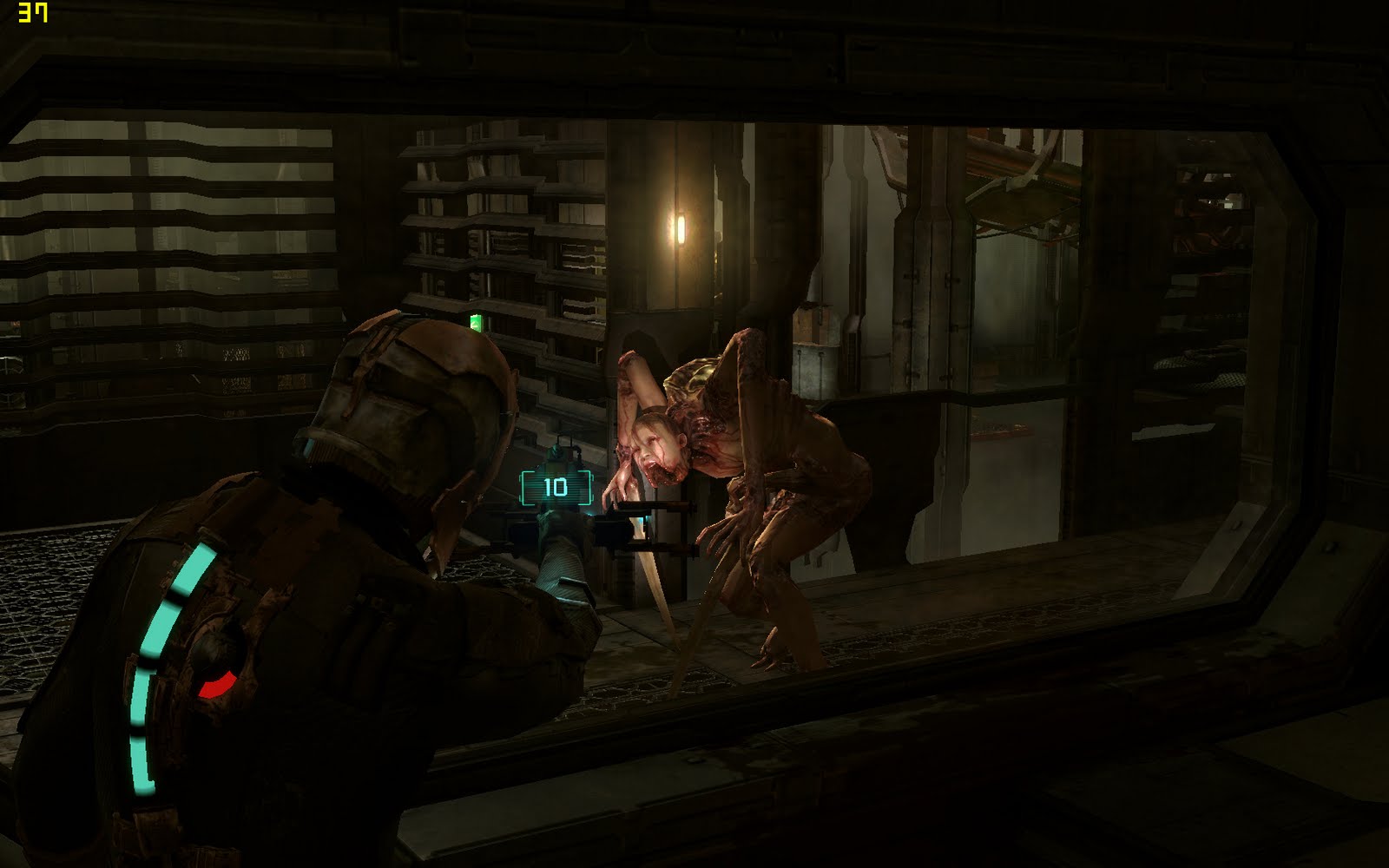
Dead Space Details set to High


Ghostbusters 1440 x 900 details set to medium (brutally buggy port)


JUST CAUSE Details set to High


Metro 2033 Comparison shots details set to high vs some details off


Titan Quest Details set to High


S.T.A.L.K.E.R details set to High

Game-A-Day Post-A-year

Fall 2010 is about to drop like a 10-ton weight,lead by the juggernaut Halo: Reach. Unfortunatley the spirit is willing but the flesh is weak and I have grossly neglected the simple act of writing to this blog about the games I play on a daily basis. While this tardiness may well never change, neither will my recreational habits so here's hoping I can knock some stuff out.

Upcoming is a snapshot of my PC setup, with the hopes of making this blog part of a living record of the hardware changes that happen and its impact on games, as I often have games installed for years, unfinished.

For now, this is a quick breakdown of what I have been tearing up over since the spring.

Red Dead Redemption: From Rockstar, the makers of the Grand Theft Auto series, this open world Western set just in the early 1900's scratches every itch a Western fan can have. Beautiful and sprawling, RDR follows John Marsten, a bad man who has done bad things but is trying to find a new life with his wife and son on the frontier. Unapologetically violent, RDR manages authenticity without straining credibility and is a deep 40 hour story. The ending, while unpopular, is poetic and appropriate.


Alpha Protocol:
A spy story wrapped in RPG dressing, AP is a brutal mess of unfinished code and relentless ambition.Simply one of the ugliest Unreal Engine games ever made and burdened with a sluggish control scheme, the game stands only on its voice-acting and story. Filled to brimming with half-baked concepts and poorly executed ideas, AP is a frustrating kind of fun, the "time before you do the crime" and saved only by its story.

Blur: Advertised as a "grown-up's Mario Kart" Blur liberally lifts power-ups and tactics from the Nintendo playbook to create a fast paced racing game where victory can be stolen at the last second with a properly applied power-up. Varied tracks and unlock-able vehicles in both single-player and multi-player extend play time, making for a exciting variation on racing games.

Split/Second: Set as a high-concept reality TV show where contestants race against each, outside attacks and destructive changes in the track itself, Split/Second is thrilling in the short term but grows repetitive quickly. The destructible tracks are re-purposed but never really changed and the "rubber-band" effect of the AI never getting too far ahead nor letting the player dominate grows tiresome quickly.

Alan Wake: A long in the making followup to Remedy's Max Payne, Alan Wake follows a writer and his wife who attempt to vacation in a sleepy town in the Pacific Northwest. Once they arrive they are attacked by a dark force that appears to stem directly from the Wake's own words. Literary minded and often surreal, Alan Wake suffers from extraordinarily repetitive gameplay. The ambiguous story is ambitious but under-served, making for a game long on ideas and short on entertainment.

Prince Of Perisa Forgotten Sands: One of the slowest starting games mentioned, POP:FS opens exactly like every other POP game and takes its time getting started. The combat mechanics are extensively simplified following the example of last year's Prince Of Persia "reboot" rather than following the example of POP:The Two Thrones. Released to coincide but not replicate the POP film, Forgotten Sands has a compelling story and after quickly ramps up a few hours in to become a challenging platformer with light RPG elements.

Just Cause 2: A sequel to the Robert Rodriguez inspired original again find our hero with an inexhaustible supply of parachutes and grappling hooks. Hampered by atrocious voice-acting and writing the campaign story is pointless and best ignored in favor of exploring the massive game map, wreaking havoc. Just Cause 2 is a silly time killer that like any good popcorn, is forgotten as soon as you are finished with it.

Bayonetta: Sexy and insane, Bayonetta is a love letter to classic Sega games wrapped in Devil May Cry style combat mechanics. An incompressible story litters the gameplay, but double entendre's and one-liners make the experience entertaining outside of the spasmodic fighting. Lightening fast reflexes are a must to play the game to its fullest.

Aliens vs Predator: Essentially a remake of the original PC AVP by developer's Rebellion, AVP is a dark repetitive game suffering from loose controls. Brutal graphic violence is unable to compensate for cliche scenarios leaving me wishing I had simply replayed either of the original PC AVP games.

Left 4 Dead 2: Shipped only a year after the original L4D, Valve stunned the world by releasing a sequel within that timespan that was also good. L4D2 is tight, multi-player team based shooter set in a zombie apocalypse.Fast-paced, violent and scary, L4D2 follows the template set by Portal and L4D by allowing the story to be told by the environment, rather than clunky exposition and cut-scenes.

Metro 2033: Inspired by Half-Life 2 and made by some of the developers of S.T.A.L.K.E.R., Metro 2033 is a gorgeous,dark, moody but linear FPS. Set in the Moscow underground after a catastrophic event, humanity struggles to survive while scrabbling for food and supplies under the near constant attack of mutant creatures. While I have only started the game, I am already struck by the mood and hungry to keep going.

Crackdown 2: A direct sequel apparently using the original engine and art assets from Crackdown, CD 2 is a empty exercise in open world destruction, similar in tone to Just Cause 2 but without the goofy mass destruction. All of the unique and exciting parts of Crackdown have been amplified and expanded to become the entirety of the game, robbing them of that excitement.

Dead Rising 2 Case Zero: A prequel to DR 2 and an XBLA release, Case Zero retains the central gameplay of DR, along with some annoying contrivances tagging along. Providing a strong backstory for what will be the retail release of DR 2, Case Zero is tightly controlled, gory, funny adventure in small town America. Loaded with re-playability and more direct method of combining items to create super weapons, Case Zero is fantastic value for $5.


Thursday, June 17, 2010

Blink Of An Eye:Six Months of Gaming

Usually the first few months into a new year are a wasteland for entertainment. Long known as a dumping ground for film properties unable to compete for summer dollars or good enough to compete for awards, this hard march to spring also affected game releases.

Until now.

2010 has proven itself to be the beneficiary of crowding in the 2009 holiday season, a trend that appears to be continuing into 2011. Spectacular games seem to be flowing unfettered on a near weekly basis with no sign of slowing down.

Since January my life has been dominated by the following experiences:


Mass Effect 2 ate my February like a fat kid on a Twinkie, with a whopping 40 hours of play. The pop-in and streaming issues of the tech from the first game are alleviated by removing the massive open environments, in exchange for tightly orchestrated corridors backed by unreachable open areas, like matte paintings in a movie. ME2 story is taut and thrilling, marred only by the brutally tedious need to scan and mine minerals from planets. Easily half of the game play time is taken up by this numbing task and it would ruin a lesser game.


Dante's Inferno is an attractive God Of War clone, literally stealing mechanics and game play from the trilogy Kratos made. Backed by a solid story re-interpreted from the epic poem, this brutally violent, twisted but visually impressive game is quick 10-15 hours. A locked camera contributes to unnecessary death and replay during platforming, creating pockets of annoyance in otherwise entertaining combat game.

Bioshock 2 suffers from a slow burn, tossing the player face first into repetitive combat without slight nods to story for the first few hours. Once all the major players are introduced, the plot and game play ramp up on a steep climb, culminating in one of the best endings I have ever seen. While not as lofty or cerebral in its goals as its predecessor, Bioshock 2 is a more than worthy sequel.


Heavy Rain is a perplexing game. A successful failure, the notion that it moves the medium forward in terms of storytelling, emotional engagement, drama or narrative is laughable. Brutally painful dialogue, voice acting and clichéd plotting are capped by a "twist" that exists for its own sake. As if by accident, Heavy Rain excels in the moments it allows itself to be a game, and the intuitive leap forward of extending quick-time events into the entire control scheme creates true moments of emotional connection. One can only hope that spurred by the innovative and sometimes gentle aspect of the controls, a stronger developer will take Heavy Rain as a starting point for a truly revolutionary game experience.


God of War 3 is everything one would want from the conclusion of the GOW trilogy. Tight game play combined with truly epic and stunning visuals tie a nearly incoherent plot together. Failing itself in its final moments, God Of War 3 betrays the very heart of the title character, stealing from Kratos everything that made him compelling.

Splinter Cell Conviction is an insanely short but beautifully crafted game. Not as short as Call Of Duty: Modern Warfare 2, Conviction single player was finished in under 8 hours. Sam Fisher finds himself caught up in even more tangled intrigue as plot threads are twisted into a nonsensical knot. While the game puts two in the head of its hard-core stealth history, new mechanics allow the player to embody Fisher as an ultra bad-ass, hunting enemies in a manner as satisfying as Arkham Ayslum.


More To Come:

Red Dead Redemption

Alpha Protocol

Blur

Split/Second

Alan Wake

Prince Of Perisa Forgotten Sands

Just Cause 2

Bayonetta

Aliens vs, Predator

Monday, May 3, 2010

Games of the last few months

Since January I have found time to rip through some truly fantastic games, some of which were more of the same, others that tried for something new and many that were plain awesome.

When I look at the amount of time I have invested in many of these experiences it blows my mind. According to tracking on Raptr.com (through Xbox live) I played Assassin's Creed 2 for nearly 40 hours, followed by games like Arkham Asylum and Mass Effect. AC2 literally fought its way into my life, successfully dressing up the repetitive gameplay of the first in new outfits and lending even more conspiracy and confusion to the over-story of Desmond, the Assassins and the Templars. A superior game to the first in almost every way, AC 2 was how I spent most of January.

Call of Duty:Modern Warfare 2 was literally an afternoon of gamplay, the elusive AAA game that I am thrilled I rented rather than buying new. The single player campaign is a Bruckheimer-esque trip into nonsense overflowing with massive set-pieces and relentless momentum. Watching the online play devolve almost instantly into a hacker's paradise of broken and unbalanced play, racist 12 year old's and an entire lack of fun made me realize the real attraction of this series has become the online, with the single-player a tacked on afterthought that takes the best moments of MW and turns them into bigger and louder sequences, ruining the charm of the original. My disappointment was palpable.

Mass Effect 2 ate my February like a fat kid on a twinkie. Yet another sequel, it fortunately fell into the AC2 camp rather than MW2, with a whopping 40 hours of play. The pop-in and streaming issues of the tech from the first game are alleviated by removing the massive open environments, in exchange for tightly orchestrated corridors backed by unreachable open areas, like matte paintings in a movie. ME2 story is taut and thrilling, marred only by the brutally tedious need to scan and mine minerals from planets. Easily half of the gameplay time is taken up by this numbing task and it would ruin a lesser game.

Time to catch up

Despite the absence of posts I have been playing a tremendous amount of games since Dec of 2009. Four months into the new year 2010 is shaping up to be a better year than the year before, and I beaten more games in the last few months than I have in the last year. Unfortunately I still have an ever growing list of games I just can't find the time to dig into and finish, and I have found most of the games beaten this year to be 20 hours or less.

This leads to a quandary, do I keep expanding a pile of games I can't finish or do I finally bite the bullet and uninstall those games I haven't looked at in a while? I think it's clear some of the games on the list will never finished, because they don't compel me to finish them.

Those counted on the list of the fallen and soon to be deleted:
-Supreme Commander: While this RTS is silky smooth to play, with tight controls, active A.I. and the vaunted strategic zoom, the story is almost non-existent. With the online multiplayer holding virtually no attraction for me, this game is hitting the recycle bin.
-Far Cry 2: Beautiful and emergent, FC 2 is everything and nothing in that it reflects the intent of the player, rather than directing the player.I could spend days simply wandering the jungle seeing what there is to see without ever completing a mission. Once again, the simplistic and arbitrary story leaves me wanting, though in this case the narrative could in fact be self-created. In the end, I want to continue this journey, but right now, I can't make the time to be self-indulgent enough to lounge about the jungle.
-Fallout 3: A fantastic open world wasteland, that betrays the faith of the player in its final moments, I have kept the game installed partially as a wish to travel the entire wasteland and see what hidden treasures lurk and partially as a benchmark for upgrades.It's time to move on.
-Crysis: Kept this as a benchmark only, can't really myself playing it again despite its graphical prowess. There isn't enough meat on these bones for another go around story-wise (there's that word again)
-VTM:Bloodlines: Buggy and sometimes ugly, this underbaked RPG has lived on through its fanbase and endless patches/updates.I loved playing it despite the performance issues as it combined sex and violence in a truly mature way.I keep it so my wife can play it but she clearly isn't coming around to this anytime soon.


Oldy but Goody

S.T.A.L.K.E.R is staying because the game's moody atmosphere and open world still calls to me, and graphics patches have helped keep the engine from becoming fugly.

Half-Life 2/Ep. 1 & 2 are perennial favorites that are like visits from old friends, and sit contently in my Steam folder, along with The Witcher.

Unlike my console games which rotate in and out of the inventory on a regular basis, PC games grow especially difficult to trade so I simply retire them to their boxes in the closet. I think fondly of them once in a while and hope I see them again, but doubt it, kind of like grandparents.

Wednesday, December 23, 2009

Still Playing: the games of 2009

2009 has produced some of the finest experiences to date in games, along side some absolute turds. Though many of the games I have played or finished here is a run-down of how I spent my time this year:

REPEAT OFFENDERS-Games I started last year (or earlier) and have not yet finished. Not surprisingly most of them are RPG's.

Witcher:Extended Edition-In August of this year a patch failue destroyed my install so I am taking the advantage of this week's sale at www.steampowered.com to re-buy the game so I can finally finish it. Extraordarily compelling, it is a long form RPG with truly mature content.

S.T.A.L.K.E.R.-This rpg shooter is still on my drive, though I have played some recent marathon sessions to blaze through the story. It remains a graphically striking game and I have finally figured out how to play it, I think. Like Far Cry 2, emergent gameplay happens throughout the eco-system of fauna and factions.

Titan Quest: This Diablo clone is clicker's paradise but not quite compelling enough to keep me hooked. I am thinking of finally ditching it, and installing Torchlight.

Supreme Commander: This massive RTS measures its victories in inches, not miles, and each encounter is a pleasant if time consuming slog.

Oblivion (360): Over 80 hours into this game and I haven't completed a fifth of the main story quest.It has become a perennial favorite, though I don't get back to it often enough.

Condemned 2 (360): Having beaten Condemned this year I tried for the too-fer but haven't yet finished this moody, scary brawler.

Grand Theft Auto 4 (360): Imagine my surprise when I played both branching paths of what I thought was the ending and traded the game, only to find out later there is still one mission to go. Combined with the lure of the well-reviewed DLC, I have it again and intend to finish it.

Tuesday, October 13, 2009

Expansion of IP: Halo 3: ODST, Halo Wars & Dead Space: Extraction

Original Intellectual Properties are the holy grail of any media endeavor. At their best, they allow the IP holders the opportunity to continue to expand on the concepts originally presented while hopefully growing the value of the franchise. At their worst, they are annually exploited revenue streams that devalue the brand and eventually saturate the market, leading to diminishing returns.

As a launch title for the original Xbox, Halo immediately established itself as the hardware’s killer application, with tight (for a console) FPS controls, a compelling and enigmatic main character and an epic battle to be fought. Two sequels would follow, pulling the franchise across into the new console generation with Halo 3 on the Xbox 360 and driving massive revenue. Halo has truly become Microsoft’s golden goose for their hardware, and though developer Bungie would eventually buy back their independence, more Halo games appear to inevitable, with or without them.

Halo Wars is the first non-Bungie developed title in the franchise expansion. No tentative first step, the game takes the iconography and back story of the original trilogy of games to flesh out a solid Real Time Strategy experience. Sporting the best RTS controls for a console ever, the game leverages the mythology to great effect, pushing the narrative forward while maintaining enough RTS gameplay staples to comfort the non-Halo player. Technical issues amount to unit pathfinding problems at best, which is negligible given the terrific presentation and unending polish.

Set five years before the original Halo, the war with the Covenant is fresh, and armies of Spartans still populate the galaxy. The proliferation of the Spartans leads to some memorable cinematics and allows for their use as “hero” units in the game but it also serves to dilute to power of the first three games. As the last of his genetically engineered kind, the Master Chief was the stoic bad-ass main character that has long been the staple of action games. However his relationship to the A.I. Cortana provides a human vulnerability that lends the character some depth and sympathy usually lost in FPS games. This prototypical dynamic relationship is also explored cinematically in the story moments of Halo Wars but to lesser effect. The wise-cracking ass-kicking Forge is a reject from the cast of Predator as is his hard-bitten but soft on the inside lady scientist side-kick. To add insult to injury, the Spartans are presented in a late game cinematic as a group of unstoppable fighting machines, executing maneuvers one could only dream of doing while playing as the Master Chief. Not only does the game make him one of a crowd, he is no longer even the best, he is now just the one who survived.

Halo 3: ODST sidesteps the issue entirely. By removing the Spartans and the Master Chief from the game it attempts to create a new look at a familiar setting. Unfolding during the events of Halo 2, a group of Orbital Drop Shock Troopers are flung into the battle for New Mombasa, an African city devastated by Covenant attack. Separated during the insertion drop into the city the shockwave generated from a Covenant warship jumping into slip-space (don’t ask), the game opens with the player taking on the role of the Rookie. Waking hours after impact, the player must navigate the ostensibly open-world of the city, searching the night for his team. No longer playing as the Master Chief, the player quickly becomes accustomed to being an under-powered under-protected soldier facing the same enemies fought in previously games. As each team-mate is located, playable chapters unlock, allowing each character to be played in turn through daylight missions. Essentially a well-meaning attempt to expand the franchise, Halo: ODST is an experiment gone wrong. The single biggest flaw is also its initial selling point: this is a Halo game, so much so that is looks and feels like dropped levels from previous releases circling the noir-ish core. With only the patina of the new splattered on the game, it feels like Halo Lite and that is just not satisfying.

Halo Wars is a far more compelling and evolutionary step for the franchise, taking the concepts in the new and different directions while staying true to the mythology, much as Dead Space: Extraction does with this nascent IP.

Unlike its progenitor which debuted on Ps3 and XB360, Extraction is Wii-exclusive prequel to the events of the first game, Dead Space. A third-person action horror game set on a massive planet cracking spaceship ravaged by monster creating infection, Dead Space tread new ground in its visuals, but had a hoary and tired story. To crack the nut of emulating the spectacular visuals of the next-gen consoles on the under-powered Wii, Extraction is a first-person “rail shooter”. Like a light-gun game, the player uses the Wii-mote to controls the aim and firing of weapons, while all else is scripted in the game engine. This was a bold and wise move on the part of developer Visceral, as this is the easily the best looking Wii game in a long time, if not since launch. The only graphical flaw I found was the lack of anti-aliasing, something not as noticeable in standard def but grossly irritating on an HD display.

Telling the story of the infection overtaking the planet’s colony as well as the ship itself, the narrative plays like an interactive movie, filling in the pieces left out of the first film. The gameplay is tightly paced, the writing sharp, and the narrative supremely executed.

Gory and violent, Extraction is a text-book example of expanding an IP without diluting the original concept.